
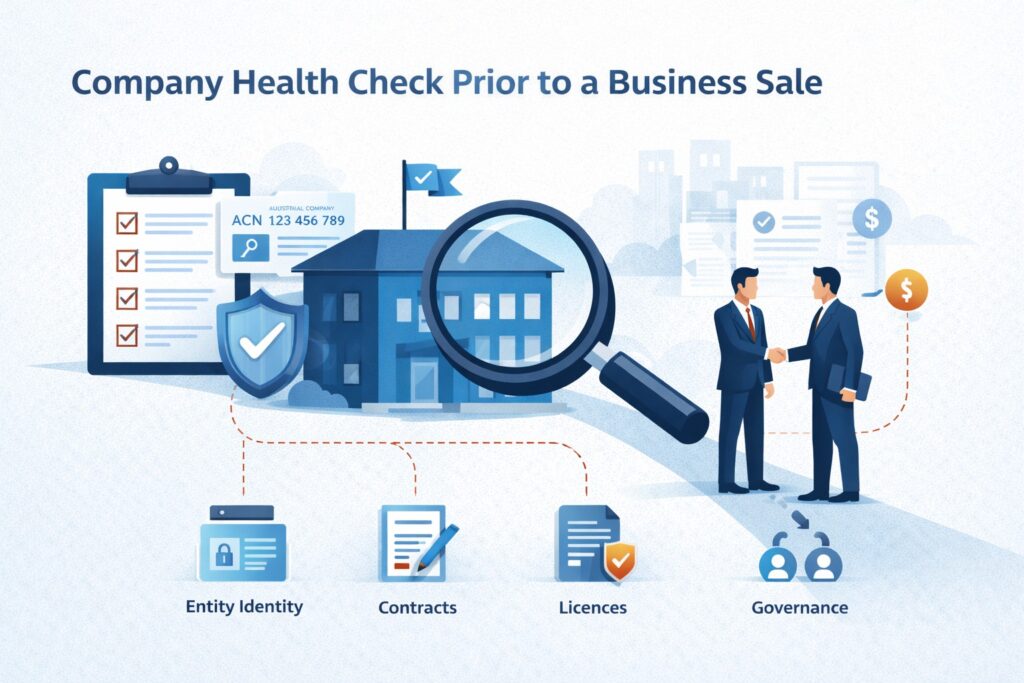
When we talk about a company’s “health” before a sale, we’re really talking about how legally tidy and compliant the business is. Buyers want to know the entity is properly set up, authorised to trade, and able to transfer the business or its assets without any hidden issues, missing consents, or unexpected liabilities.
1. Entity identity and registration
Make sure the company’s legal name and ACN/ABN appear consistently across everything—contracts, invoices, bank accounts, insurance, and licences. It’s also worth double‑checking that your ASIC details are up to date, including the registered office, principal place of business, and current directors and secretary. Keep your core corporate records in good order (constitution, registers, key minutes/resolutions) and ensure the company isn’t in default for things like overdue fees.
2. Trading name, business name, and brand
If the business trades under a name that’s different from the company’s legal name, make sure that business name is properly registered and owned by the right entity—not a director or related party. The trading identity should be consistent everywhere: website, marketing materials, signage, stationery. Also check that the company actually owns the brand assets it relies on—trade marks, domain names, social media accounts—and fix any gaps before going to market.
3. Governance and authority
Buyers expect clean, orderly governance. That means updated director and shareholder registers, a clear picture of the capital structure (including any options or convertible instruments), and confirmation that the sale can be approved under the constitution and any shareholder agreements.
4. Contracts, consents, and licences
Review key customer and supplier contracts to ensure they’re in the correct entity name. Look closely at assignment/novation and change of control clauses to understand what consents might be needed for either an asset sale or a share sale. Check that all operational licences and permits are current and confirm whether they can be transferred.
5. PPSR (Personal Property Securities Register)
Run a PPSR search over the selling entity (and any other relevant grantors) early in the process. Buyers will be checking for security interests registered over business assets—equipment, inventory, receivables—and will usually require these to be released at completion. Identify any finance leases, retention‑of‑title arrangements, or receivables facilities, and line up the discharge documents or release mechanics so you can deliver clear title.
Common red flags
Some of the issues that tend to worry buyers include: using the wrong contracting entity, unregistered business names, missing corporate records, undisclosed PPSR registrations, and key IP or licences being held by someone other than the selling entity.
If you are considering selling your business in the future doing a quick health check can ensure the company is sale ready – [email protected].